

 Credit card
 10 steps
Quick answer: how to get out of credit card debt in Brazil
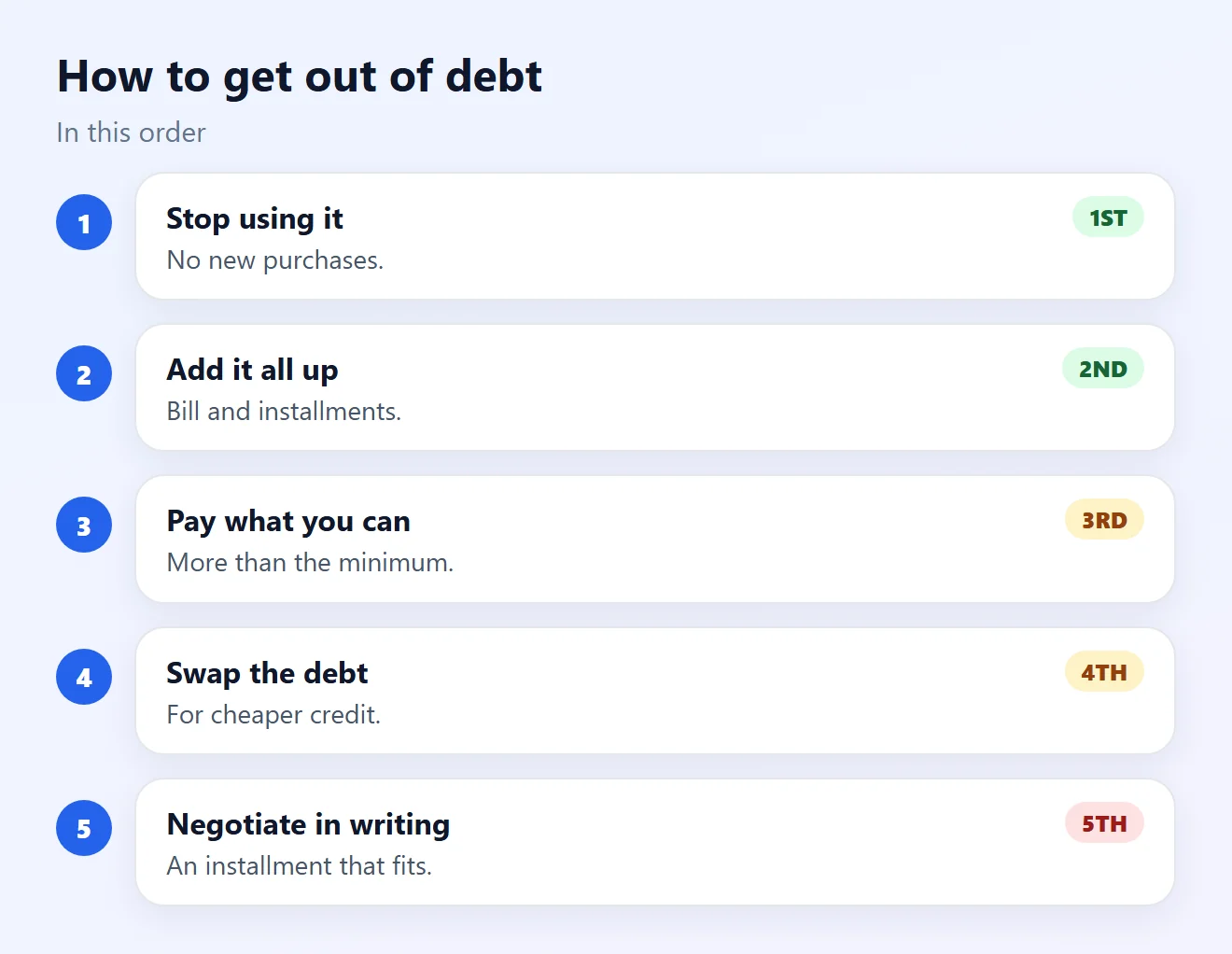
- Stop using the card and add up everything you owe: current bill, future installments and charges.
- Pay more than the minimum whenever you can. The unpaid balance goes to revolving credit, which can only last until the next bill.
- Know the cap: interest and charges on revolving credit and bill installments can't exceed 100% of the original debt.
- Swap the debt for cheaper credit or use free portability to move the balance to another bank.
- Fallen behind? Negotiate through official channels and accept only an installment that fits, with everything in writing.
What's your case?
How to get out of credit card debt: 10 steps
1Stop using the card
- Put the physical card away and remove it from digital wallets and websites where it's saved.
- Every new purchase adds to a debt that's already growing with interest.
- Move everyday spending to debit or Pix, within what fits your month.
2Read the bill and add up what you owe
- Since July 2024, Brazilian card bills have a highlight area with the total amount, due date and limit.
- The payment options area shows the minimum payment, next month's charges if you pay only the minimum, installment options from lowest to highest total, monthly and yearly interest rates and the CET (total effective cost).
- Also note the future installments of purchases split into payments. That's the real size of your debt.
3Understand the minimum and revolving credit
- If you pay less than the total, the rest goes to revolving credit, one of the most expensive credit lines.
- Under the National Monetary Council's rule, the balance can only stay in revolving credit until the next bill's due date. After that, it can be split into installments on terms better than revolving credit.
- Pay as much as you can above the minimum and compare the bill's own installment options by total cost.
4Know the 100% interest cap
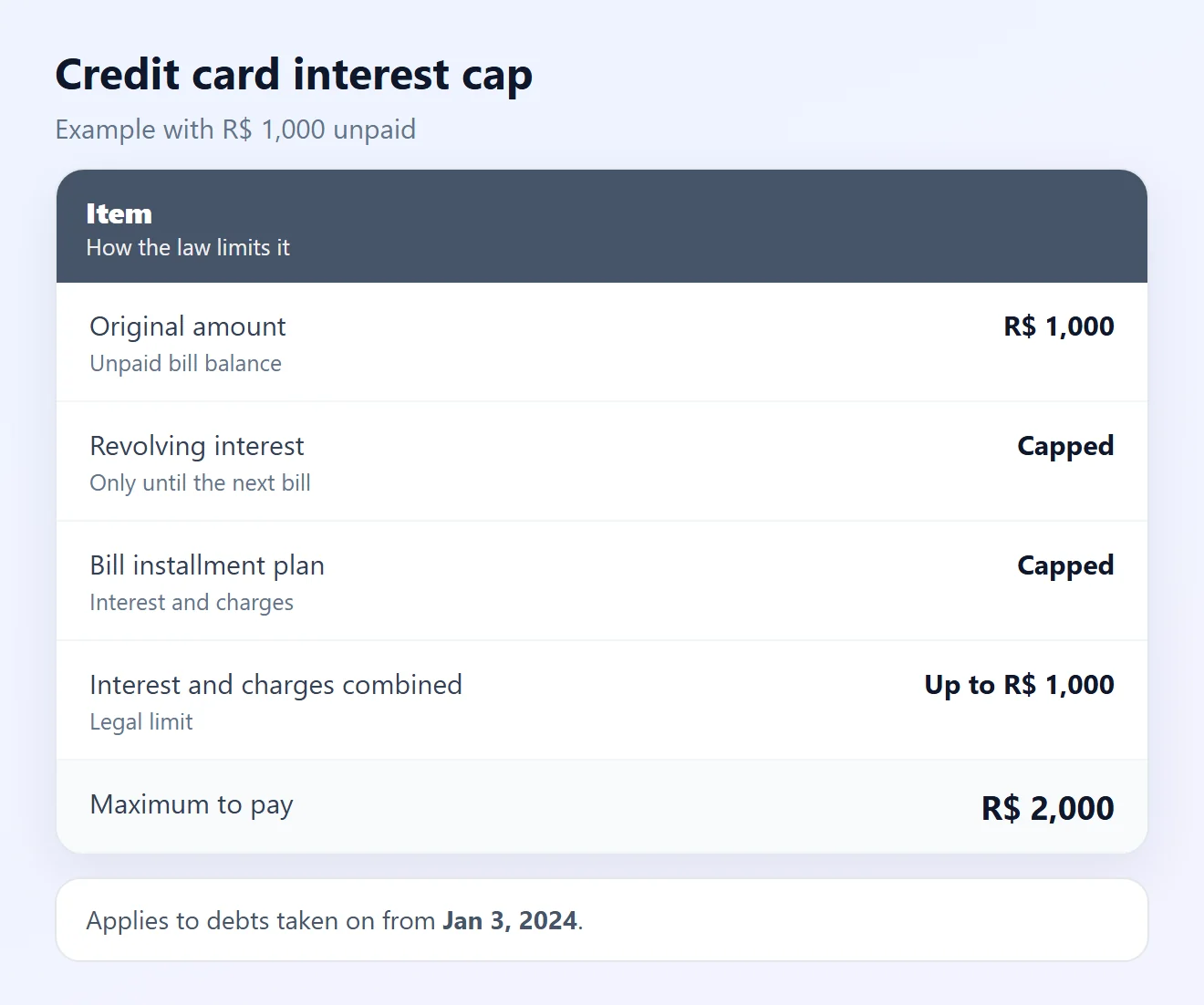
- Brazil's Desenrola Law capped interest and charges on revolving credit and bill installments at 100% of the original amount of the debt.
- Example: R$ 1,000 unpaid can grow to R$ 2,000 at most.
- The cap applies to debts taken on from January 3, 2024, even when revolving credit is turned into an installment plan.
- Charged more than that? Complain to the bank, on consumidor.gov.br or to Procon, with your bills at hand.
5Swap it for cheaper credit
- A personal or payroll loan with a lower CET can pay off the card and lower the total cost.
- Compare the total to pay in both options before swapping.
- After paying it off, don't use the limit again, or you'll have both the loan and the bill.
See how to compare personal loans and what to check in a payroll loan.
6Use debt portability
- Since July 2024, you can move the revolving and bill installment balance to another institution with better terms.
- Portability is free. Ask the institution that will take on the debt for an offer.
- If your bank makes a counteroffer, it must have the same term as the competing offer, so you can compare the cost.
7Negotiate if you've fallen behind
- Contact the card issuer through the app, website or phone on the back of the card, not through links you received.
- Before accepting, ask in writing for the installment amount, number of installments, CET and total.
- Accept only an installment that fits your budget: a broken deal brings back charges and negative records.
- No answer? File a complaint on consumidor.gov.br.
8Set a limit you can pay
- Most apps let you lower your card limit. Keep an amount you can pay in full every month.
- Avoid splitting new purchases into installments while you're in debt: they take up the limit and future income.
9Owe in many places? Use the over-indebtedness law
- If you, in good faith, can't pay all your debts without compromising the basics, Brazilian law treats it as over-indebtedness.
- You can ask a judge for debt restructuring, with a hearing with all creditors and a payment plan of up to 5 years that preserves a minimum to live on.
- The conciliation stage can also take place at consumer protection agencies, such as Procon.
10Avoid falling back into debt
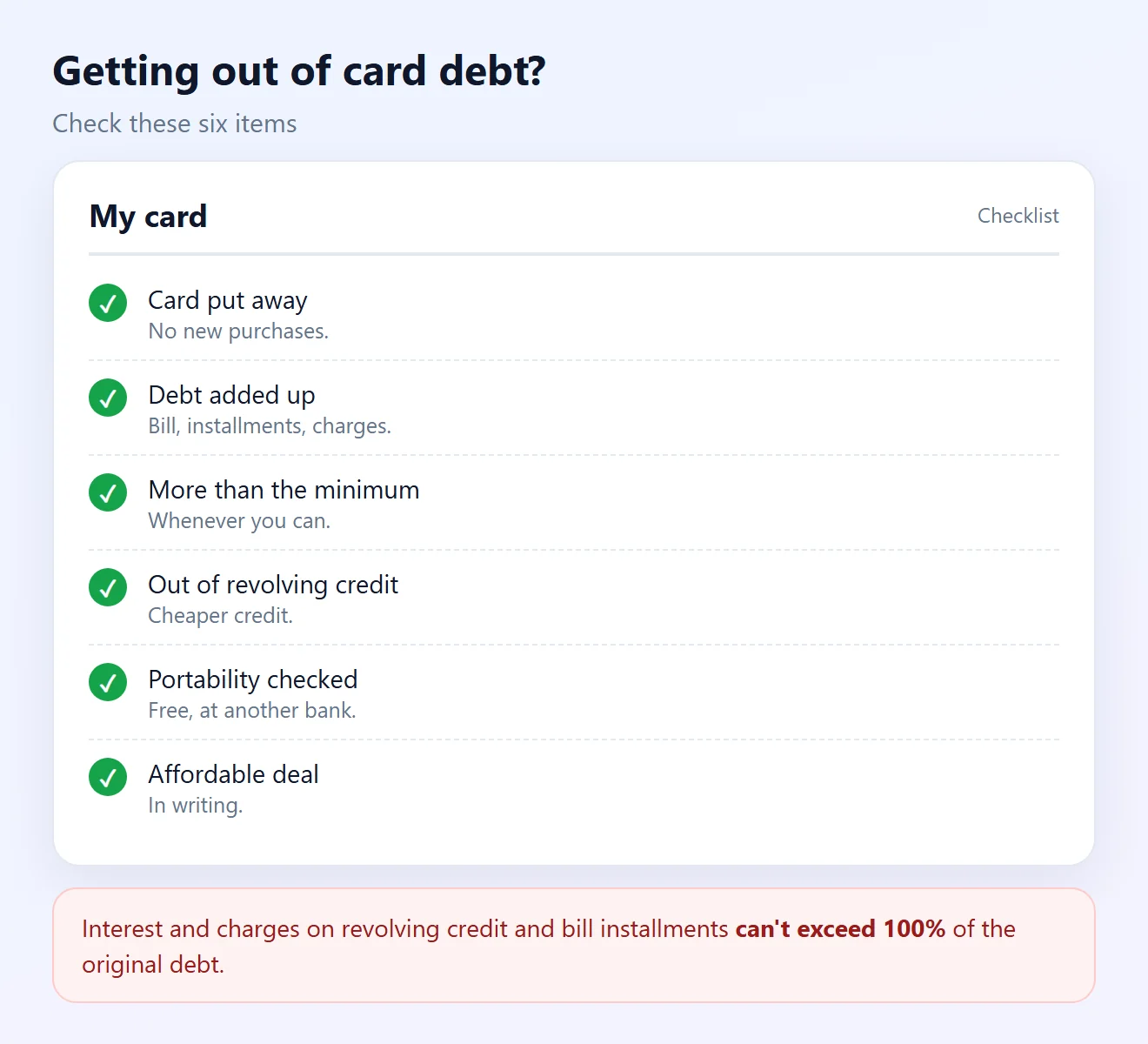
- Use the card again only when you can pay the full bill every month.
- Build a budget and an emergency fund, even a small one, so you don't turn to revolving credit.
- Check the Central Bank's Registrato for debts or cards you don't recognize.
Problem and fix
| Problem | Likely cause | Fix |
|---|---|---|
| Bill grows every month | Paying only the minimum | Exit revolving credit and stop using it (steps 1 and 3) |
| Debt more than doubled | Charges over the cap or debt from before 2024 | Check the cap and complain (step 4) |
| High installment interest | Offer not compared | Portability or cheaper credit (steps 5 and 6) |
| Deal didn't fit | Installment over budget | Renegotiate a smaller installment (step 7) |
| Debts at several banks | Over-indebtedness | Restructuring at Procon or in court (step 9) |
| A card I don't recognize | Misuse of your CPF | Check Registrato and dispute (step 10) |
Frequently asked questions
Is there a limit on credit card interest in Brazil?
Yes. Interest and charges on revolving credit and bill installments can't exceed 100% of the original debt, for debts taken on from January 3, 2024.
How long can debt stay in revolving credit?
Only until the next bill's due date. After that, the balance can be split into installments on better terms than revolving credit.
Is paying only the minimum worth it?
Not if you can pay more. The rest goes into revolving credit, one of the most expensive lines. The bill shows the charges you'll pay next month if you pay only the minimum.
What is card debt portability?
It's moving the revolving and bill installment balance to another institution with better terms. It's free and has applied since July 2024.
How do I compare the bill's installment options?
The bill lists options from lowest to highest total to pay, with monthly and yearly rates and the CET. Compare by total.
Is a loan to pay off the card worth it?
It can be, if the loan's CET is lower and you stop using the limit. Compare the total to pay in both options.
I missed a bill. What should I do first?
Stop using the card, contact the issuer through official channels and ask for a written offer with installments, CET and total. Accept only what fits your budget.
What is over-indebtedness?
It's when a person, in good faith, can't pay all consumer debts without compromising the minimum to live on. The law allows a restructuring with a plan of up to 5 years.
Should I cancel the card?
Canceling doesn't erase the debt. What matters most is to stop using it and lower the limit. Decide after paying it off.
How do I avoid going back to revolving credit?
Pay the full bill, keep a limit that fits your budget and build an emergency fund.
Related content
More practical solutions in Credit card.

How to Use Your Credit Card Limit Without Getting Into Debt
Learn how to use your credit card limit responsibly, control spending, avoid debt, and keep your budget balanced.
High Credit Card Bill: How to Reduce It and Regain Financial Control
Learn how to reduce a high credit card bill, identify excessive spending, cancel unnecessary charges, and prevent new debt.
 15 minutes
Sources
- Law 14,690/2023 (Desenrola), art. 28: card interest cap (in Portuguese)
- gov.br: new card interest cap, portability and clearer bills (in Portuguese)
- CMN Resolution 4,549/2017: revolving credit only until the next bill (in Portuguese)
- Consumer Protection Code, arts. 54-A, 104-A and 104-C, over-indebtedness (in Portuguese)
- Central Bank of Brazil: card interest rates by institution (in Portuguese)
- consumidor.gov.br: complaints against companies (in Portuguese)
The images on this page are illustrations created by Fixfy. Amounts are examples.