

 Household economy
 10 steps
Quick answer: what cuts your water bill the most
- Look for leaks first: turn off every tap, write down the water meter reading and check again after 1 hour. If it changed, there's a leak.
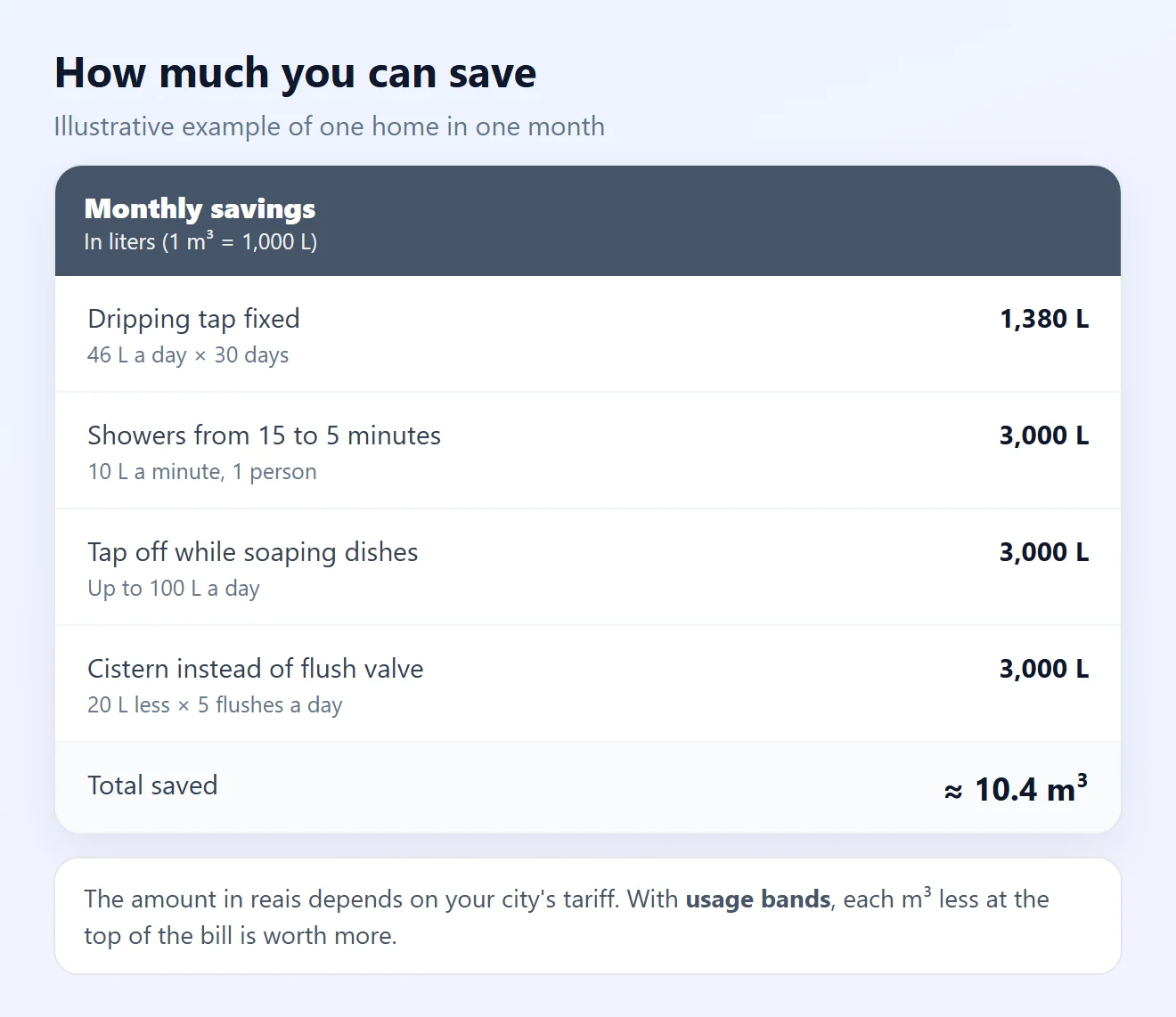
- Fix any dripping tap: it wastes about 46 liters a day, or 1,380 liters a month.
- Keep showers to 5 minutes at most and turn the water off while you soap up: every minute of shower uses more than 10 liters.
- Turn the tap off while brushing your teeth and soaping the dishes; run the washing machine only with a full load.
- In Brazil, low-income families registered in CadÚnico or receiving BPC are entitled to the social tariff: 50% off the first 15 m³.
What's your case?
How to save water at home: 10 steps
1Understand your water bill
- Usage is shown in cubic meters (m³): 1 m³ = 1,000 liters.
- Compare this month's usage with previous months. Bills usually show the history of recent months.
- Check whether there's a sewage charge and how it's calculated, and whether your utility charges by usage bands: if so, each m³ above the band costs more.
- Write down the meter reading once a week: you'll spot an increase before the bill arrives.
2Do the water meter test
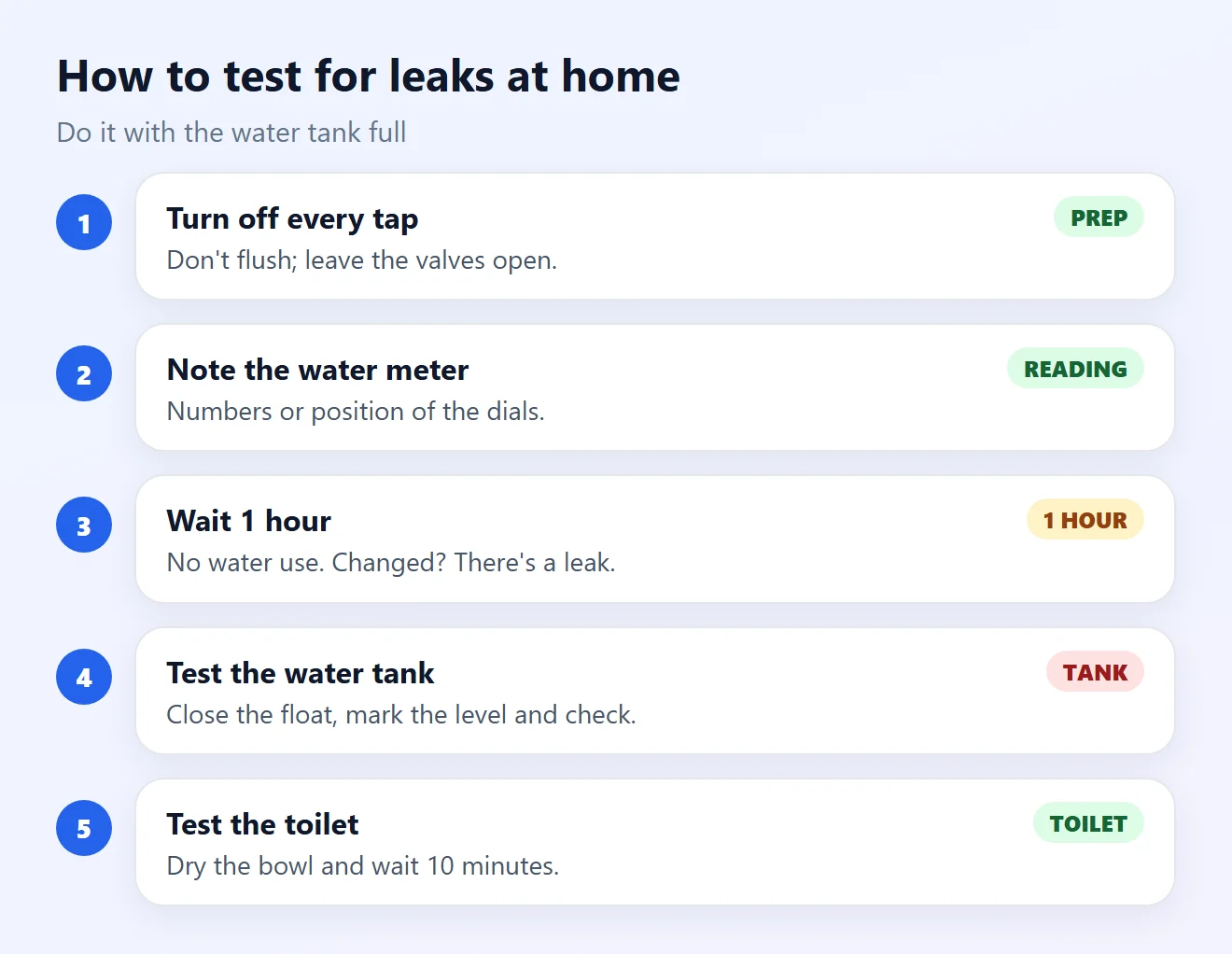
- Wait for the water tank to fill. Turn off every tap and don't flush the toilet; leave the valves open.
- Write down the meter numbers or mark the position of the dials.
- Wait 1 hour without using water and check again.
If the numbers changed, there's an internal leak. Another option: note the reading at night after the last use and check it in the morning before opening any tap.
3Test the water tank and pipes
- Pipes fed straight from the street: close the tank's inlet valve or tie up the float, keep the meter valve open and mark the meter. If it changed after 1 hour, the leak is in that section.
- Pipes fed from the tank: close the taps, don't flush, close the float valve, mark the water level in the tank and check after at least 1 hour. If the level dropped, there's a leak in the plumbing or the toilets.
- A tank overflowing through the overflow pipe means a faulty float: replace or adjust it.
4Test the toilet and flush
- Remove all the water from the bowl and dry the bottom.
- Wait 10 minutes without flushing.
- If water appears again, the flush valve or cistern is leaking.
- Press the flush only once and keep the valve adjusted.
- A wall-mounted flush valve can use 26 liters per flush; a close-coupled cistern uses 6 liters. If you replace it, choose the cistern.
- Don't throw trash in the toilet: it means more flushes and can cause clogs.
5Fix dripping taps and showers
- A dripping tap wastes about 46 liters a day, or 1,380 liters a month.
- Most of the time the cause is a worn washer (seal), a cheap part to replace. Close the valve before working on it.
- If the tap or shower drips even when firmly closed, call a plumber.
6Shorten your showers
- Keep showers to 5 minutes at most: every minute, more than 10 liters go down the drain.
- Turn the water off while you soap up and wash your hair.
- Agree on a shower time with the family and use a phone timer.
7Turn off the tap at the sink
- Brushing your teeth or shaving for 5 minutes with the tap running uses about 40 liters. A glass of water is enough to brush.
- For dishes, turn the tap off while soaping and only open it to rinse: this saves up to 100 liters.
- Scrape food scraps off the plates with a napkin before washing.
8Run the washing machine with a full load
- A 5 kg machine uses about 135 liters per wash: wait until you have a full load.
- Use the machine's eco programs when available.
- Reuse rinse water to wash floors, sidewalks, rugs and sneakers. Don't use it for drinking, cooking or bathing.
9Swap the hose for a bucket and watering can
- Clean the sidewalk with a bucket and broom, never a hose.
- Wash the car with a bucket and cloth.
- Water plants with a watering can, early in the morning or late in the afternoon, when less water evaporates.
10High bill for no reason? Request a review and check the social tariff
- If the meter test showed no leak and the bill jumped, ask your water utility for a bill review and a meter inspection. Keep the protocol number.
- After an old meter is replaced, the bill may go up because the new one measures more accurately. If the increase is large, do the leak test.
- If it isn't solved, go to the utility's ombudsman, your state or city regulatory agency, or Procon.
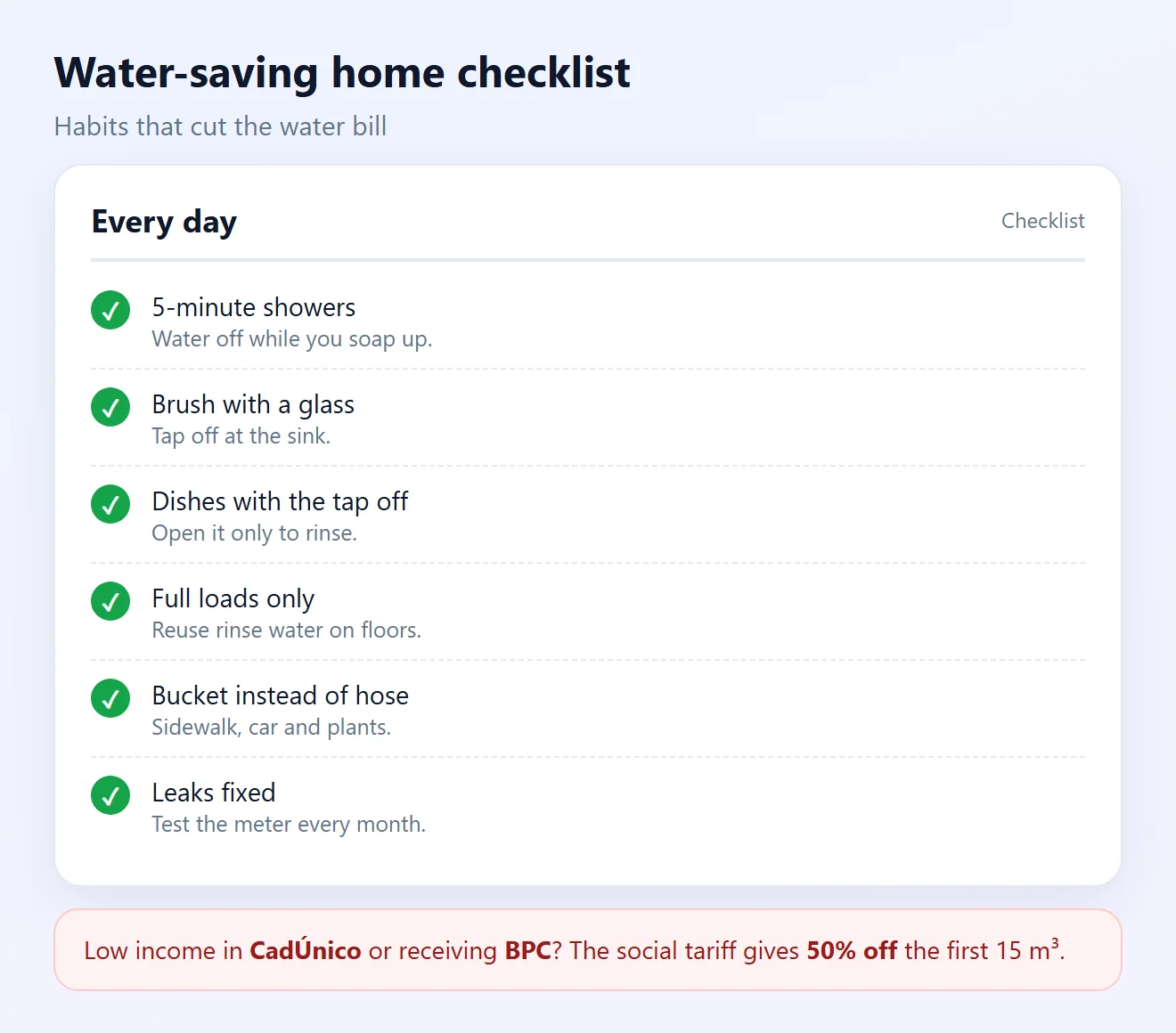
- Social tariff (Brazilian Law 14,898/2024): families with income of up to half a minimum wage per person, registered in CadÚnico or with a member receiving BPC, get 50% off the first 15 m³. Inclusion should be automatic; if it wasn't, request it at the utility with a photo ID and proof of CadÚnico or BPC.
To save on energy too, see how to save electricity and how to save cooking gas.
How much each habit uses
| Habit | Usage | How to save |
|---|---|---|
| Dripping tap | 46 L a day | Replace the washer (step 5) |
| Running shower | Over 10 L a minute | 5-minute showers (step 6) |
| Flush valve | Up to 26 L per flush | Adjust the valve or use a cistern (step 4) |
| Brushing teeth with the tap running | 40 L in 5 minutes | Use a glass of water (step 7) |
| 5 kg washing machine | 135 L per wash | Full loads only (step 8) |
| Hose on the sidewalk | High | Bucket and broom (step 9) |
Approximate figures published by Brazilian water utilities. Real usage depends on your home's water pressure and fixtures.
Frequently asked questions
How do I know if there's a leak at home?
With the tank full, turn off every tap, write down the meter numbers and check again after 1 hour without using water. If the numbers changed, there's an internal leak.
How do I test for a toilet leak?
Remove the water from the bowl, dry the bottom and wait 10 minutes without flushing. If water comes back, the flush valve or cistern is leaking.
How many liters are in 1 m³ of water?
1 cubic meter equals 1,000 liters. That's the unit shown on the water bill.
How much water does a dripping tap waste?
About 46 liters a day, or 1,380 liters a month. Most of the time, replacing the tap washer is enough.
How much water does a shower use?
A shower uses more than 10 liters a minute. A 5-minute shower, with the water off while you soap up, uses far less than a 15-minute one.
Wash dishes by hand or in a dishwasher?
By hand, the running tap is what counts: soap everything with it off and only open it to rinse, saving up to 100 liters. If you use a dishwasher, run it only when full.
Can I reuse water from the washing machine?
Yes, rinse water can be used to wash floors, sidewalks, rugs and sneakers. Don't use it for drinking, cooking or bathing.
My bill went up and I found no leak. What should I do?
Ask the water utility for a bill review and a meter inspection, and keep the protocol number. If it isn't solved, go to the ombudsman, the regulatory agency or Procon.
Who is entitled to Brazil's social water tariff?
Families with income of up to half a minimum wage per person registered in CadÚnico, or with an elderly or disabled member receiving BPC. The discount is 50% on the first 15 m³ (Law 14,898/2024).
Do I need to apply for the social tariff?
The law requires the utility to include families automatically based on CadÚnico. If you weren't included, request it at the utility with a photo ID and proof of CadÚnico or BPC.
Related content
More practical solutions in Household economy.

How to Avoid Impulse Purchases and Save More
Learn strategies to control impulse purchases, reduce unnecessary spending, and make more deliberate financial decisions.
 15 minutes
How to Compare Prices Online Safely and Save More
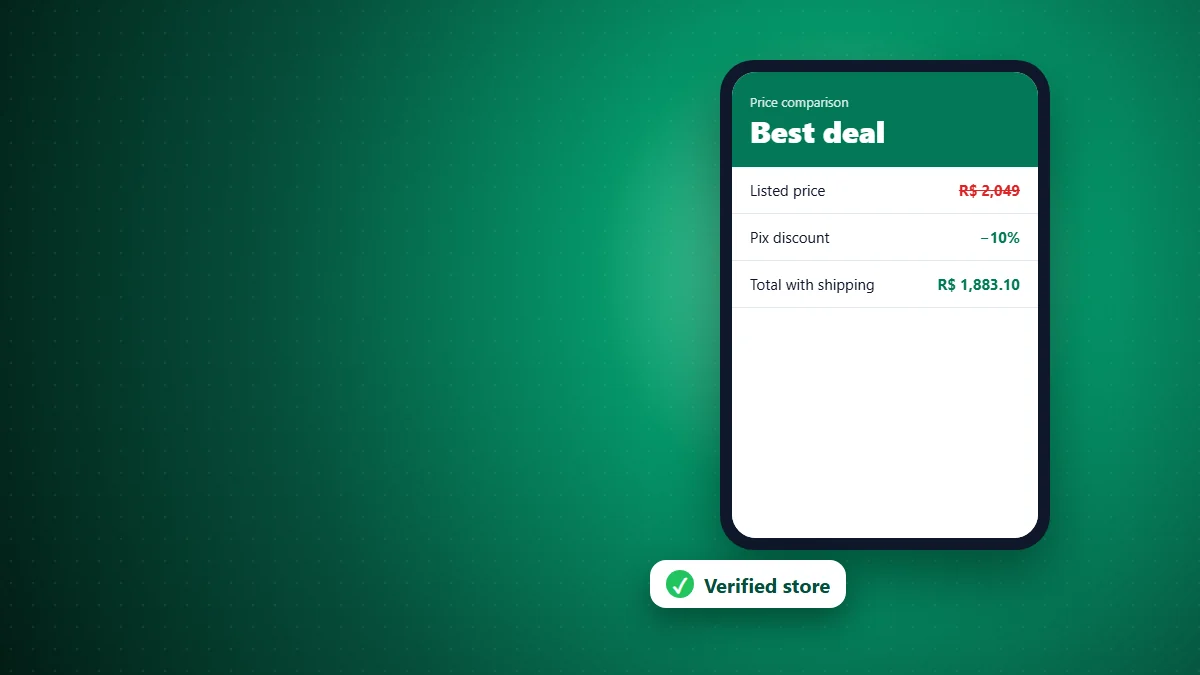
Learn how to compare prices online safely, calculate the total purchase cost, reduce scam risk, and find better value before placing an order.
15 minutes
How to save cooking gas and reduce household expenses
Learn simple habits to save cooking gas, increase food-preparation efficiency, and reduce monthly expenses without compromising meal quality.
15 minutes
Sources
- Planalto: Law 14,898/2024 (Social Water and Sewage Tariff), arts. 2 to 6 (in Portuguese)
- DAE Americana (municipal water utility): how to save water and leak tests (in Portuguese)
- Sanepar: turn off the tap, use without waste (in Portuguese)
The images on this page are illustrations created by Fixfy. Usage figures are approximate and vary with fixtures and water pressure. Billing and bill-review rules depend on your water utility.